← Norway: Beyond the Arctic Circle← Nórsko: Za polárnym kruhom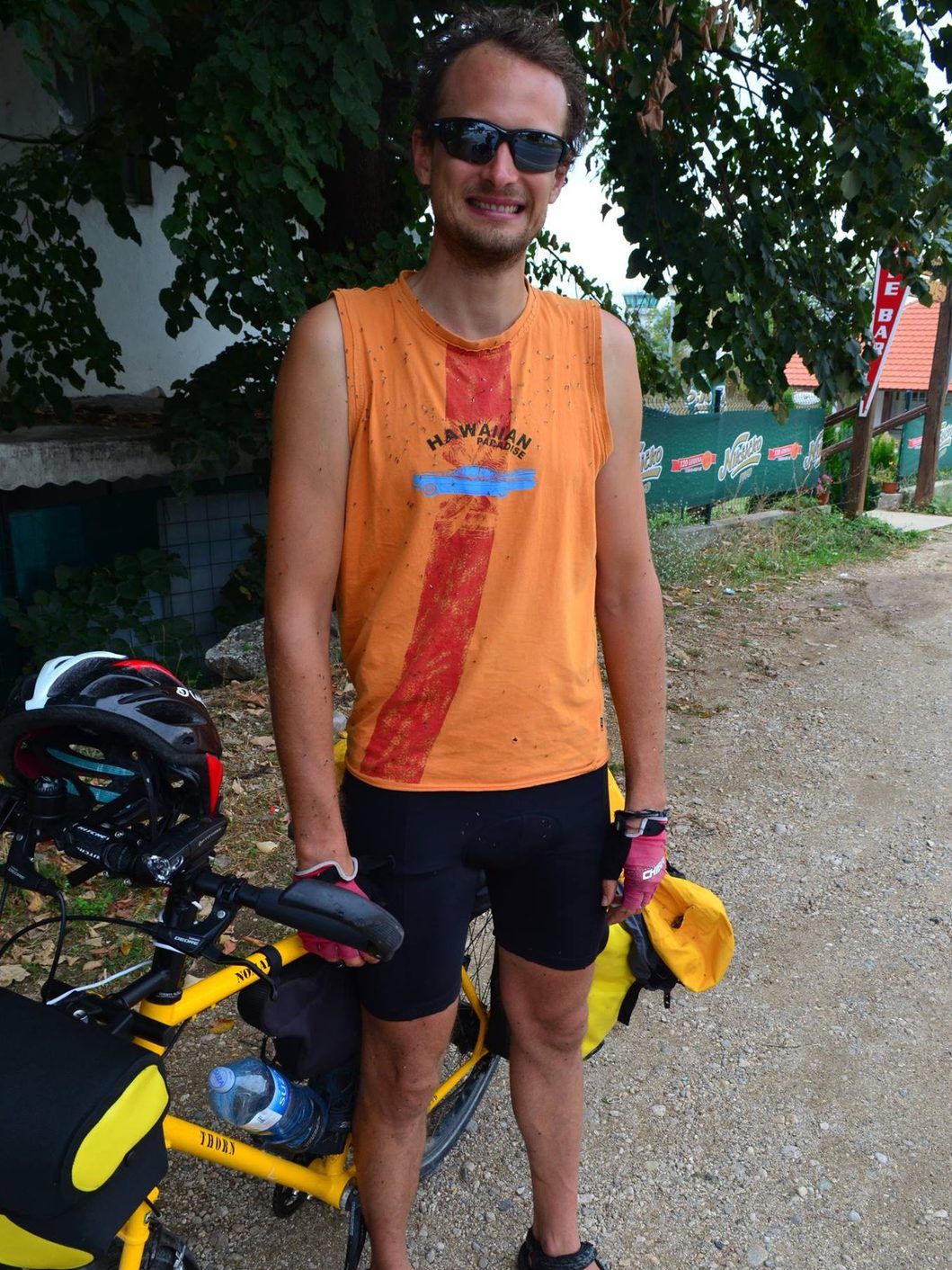

LofotenLofoty
· 443 km · 3709 m climbing · 3760 m descent · Download GPX
· 443 km · 3709 m stúpania · 3760 m klesania · Stiahnuť GPX
with Juro, Kika, Janči and Kikas Jurom, Kikou, Jančim a Kikou
Cyklotrip 2019 began with a flight to Stockholm, where we spent the first night camping in the woods right next to the airport runway. The next day a night train was already waiting for us, a twenty-hour ride across the whole of Sweden, straight up over the Arctic Circle, with our bikes boxed up and faithfully riding along with us the whole way.
In Narvik we reassembled the bikes and set off. We were welcomed by exactly the weather you'd expect up north, five degrees and rain, which Jano dealt with by wearing supermarket bags over his shoes and a pair of rubber gloves.
We knew what we were getting into, but that didn't make us any more thrilled about the weather Lofoten greeted us with. Nights hovered around 10 degrees and daytime temperatures rarely climbed past twelve. On roughly the third day we finally saw the sun for the first time, which delighted us no end. That night we slept in an old house that the locals clearly use as a party spot, a much better place to sleep than the night before, which we'd spent squeezed into a tiny tunnel under the highway.
Lofoten could be described as a chain of small islands strung together by spectacular bridges. Which also means that on Lofoten you're constantly crossing either a bridge or some kind of ferry.
Around the third day it started really pouring. We found another abandoned house, packed ourselves into it, and waited out the night there. The next day, though, the Norwegian police kicked us out of it. It was pretty funny, because Jano with his home-patched-together bike clearly looked like a homeless guy to them. They gave our fancy bikes with the Ortlieb panniers barely a glance, but they actually stopped by Jano and asked him what was going on. He was pretty uncomfortable about it, but we explained to him that clothes make the man. The officer turned out to be very friendly and pointed us toward a better camping spot a bit further down the road, by a local lake.
We camped there the following night too, and the next morning, as we were packing up the tent, the local midges attacked us. These little flies are called midges, and you can also find them, for instance, in the north of the UK. They're genuinely unpleasant, they bite and sting, and Kika tried to proactively shield herself from them with the tent's canvas fly.
The next night was wonderful, because we found a cyclists' shelter in the form of a small glass-walled house right on the shore. We really didn't want to leave, but a beautiful sunny day was waiting for us, and we couldn't let it pass us by.
We spent the second-to-last night at Kvalvika, the beach where the guys from the film North of the Sun built a small shack out of driftwood. If you haven't seen that film, I highly recommend it. Kvalvika really blew us away with its untamed nature, nests of wild birds, and the overall feeling of being completely off the grid.
We were reluctant to leave that place too, but in the end we wrapped up our Lofoten leg in the village of Å, right at the very end of the island chain, and seemingly at the end of the world, too.